

Tracy and Matthew

From the moment my husband, Matthew, and I decided we wanted to start a family, I had a feeling our path to parenthood might not be simple. I’d never had regular periods — sometimes they’d be 40 or even 50 days apart, or sometimes they just wouldn’t come for months — and deep down, I knew something wasn’t right. What surprised me most, though, was how little this is ever talked about. No one ever tells you that irregular cycles can be a sign of a deeper issue, and I think that’s something that needs to change.
When we started trying, month after month passed without success, and the worry started to grow. Eventually, through testing and bloodwork at Pacific Centre for Reproductive Medicine (PCRM), we were officially diagnosed with Polycystic Ovary Syndrome (PCOS) — a condition that explained everything. My ovaries were full of healthy eggs, but they weren’t releasing them properly. My brain and my ovaries just weren’t connecting the way they were supposed to.
Once we connected with PCRM, we quickly realized how much there was to learn and how involved the process would be. There were countless blood draws, an HSG test to check my fallopian tubes, hospital visits, doctor appointments, and ultrasound after ultrasound. It was overwhelming at first — trying to balance all the logistics, the emotions, and the uncertainty — but we knew every step was getting us closer to understanding what my body needed.
Once we had a diagnosis, our treatment plan began. I started taking progesterone pills to help regulate my cycles and support my hormones, and we began Letrozole (ovulation induction medication). Our first round of Letrozole didn’t work. I’ll never forget the day I got my day-21 lab results — it was Father’s Day. I opened the report, saw the numbers, and immediately started crying. I remember collapsing into my husband’s arms and apologizing through tears, saying, “I’m so sorry… not this month.” It’s one of those moments that sticks with you — the heartbreak, the helplessness, the exhaustion of wanting something so deeply and feeling like your body won’t cooperate.
But our team at PCRM wouldn’t let us give up. They told us, “We’ll try again — we’ll adjust the dose.” And that’s exactly what we did. On our second round of Letrozole, with a higher dosage, my body finally responded. I still remember seeing the next set of results and just sobbing again — but this time, they were tears of relief and gratitude.
In August 2023, we found out we were pregnant. After so many months of heartbreak, disappointment, and waiting, it felt almost surreal. My progesterone levels had skyrocketed, and everything finally aligned. We were overjoyed, in complete disbelief that after so much struggle, our dream was actually coming true.
In April 2024, we welcomed our beautiful baby girl, Elena. She’s the light of our lives and the greatest reminder that miracles can happen when you least expect them.
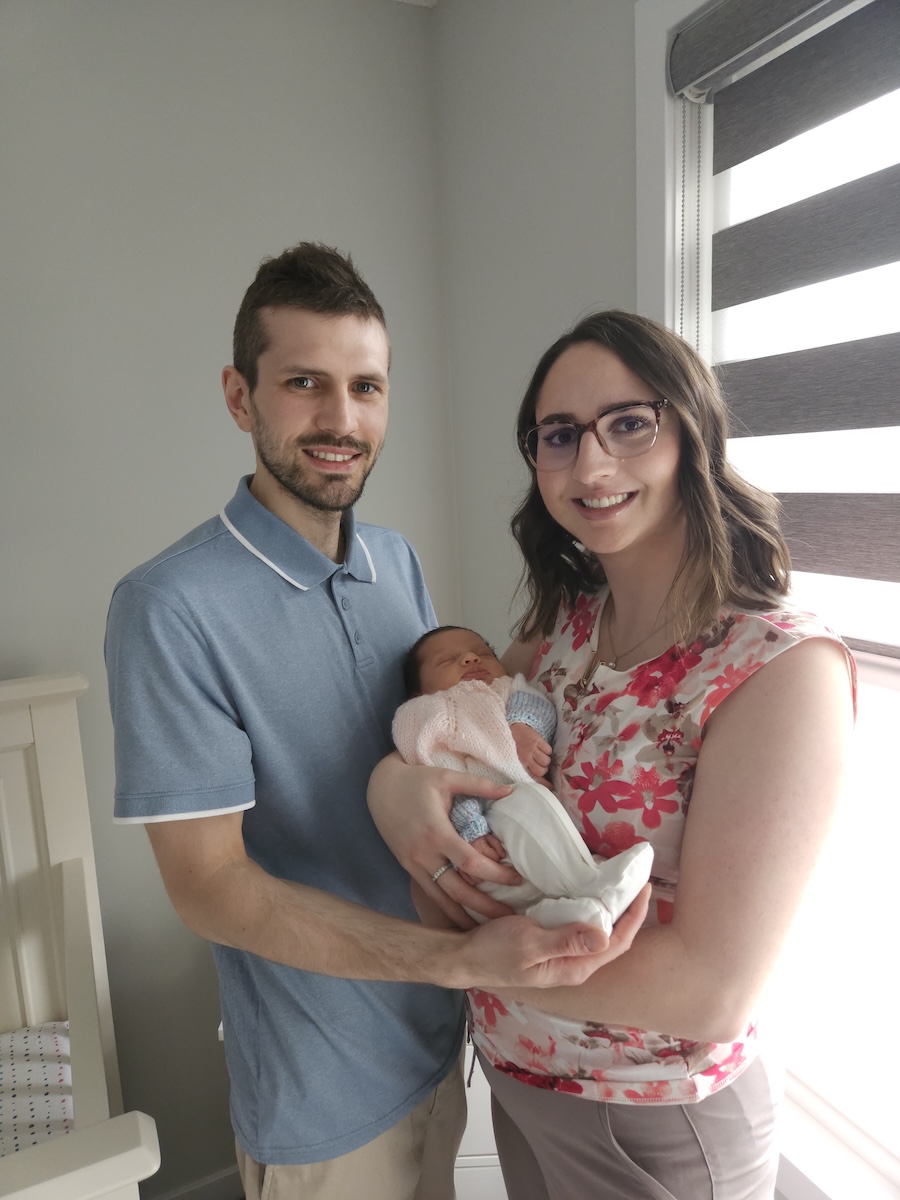
Now, as we start our journey toward trying for our second child, we’re reminded that fertility challenges don’t just disappear after one success. It still takes time, patience, testing, and planning — but we’ve learned how to navigate it with more peace, more understanding, and far less self-blame.
If there’s one thing I’ve learned from this experience, it’s that fertility treatment is not one-size-fits-all. For some people, IVF is the right path. For others, it might be IUI, ovulation induction, or hormonal support. There’s no “less than” option. Every journey is valid, every story is meaningful, and every form of help matters.
When I think about what I hope people take away from our story, it’s this:
So many people assume that fertility treatment always means IVF, but that’s not true. There are so many approaches, and they all count. Whether you’re taking medication to help you ovulate, doing timed cycles, or going through IVF — you’re still walking a fertility journey, and it’s just as real and significant.
Community has been such an important part of our story. Finding others who have walked this road made me feel less alone, less broken, and less ashamed. Hearing their stories reminded me that infertility isn’t a reflection of my worth or something I caused. It’s something that just happens — and that’s okay.
To anyone who’s currently in the middle of their trying-to-conceive journey, I want to say this:
Please, be gentle with yourself. You’re doing everything you can. Don’t nitpick every symptom or blame yourself when things don’t go as planned. It’s okay to take breaks. It’s okay to cry. It’s okay to feel frustrated and still hold on to hope. Healing and hope can exist together.
Your path may not look like everyone else’s, but that doesn’t make it any less beautiful or meaningful. There is a way forward — even if it’s not the way you first imagined.
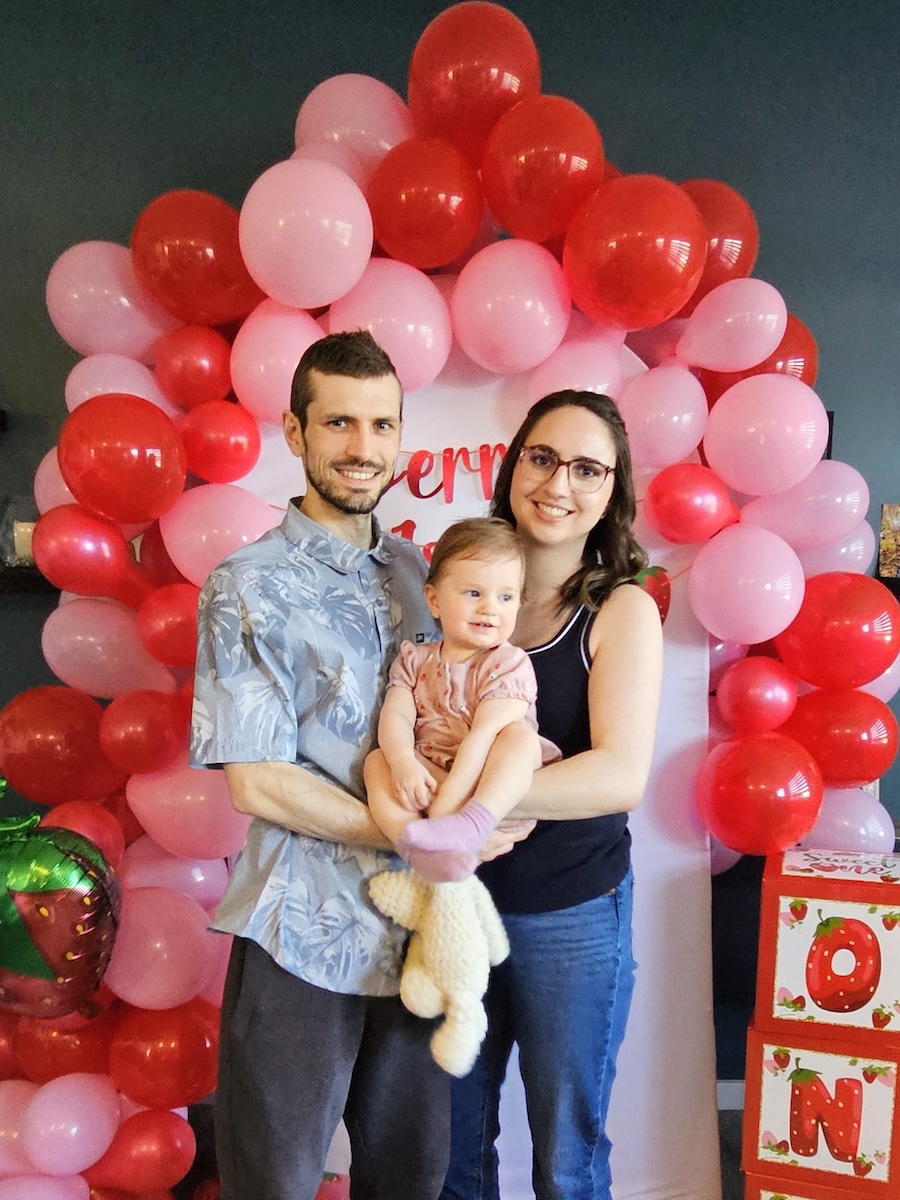
For us, our journey wasn’t linear. It wasn’t perfect. But it was ours. And it brought us to Elena — our miracle girl.
💚 Sponsored in part by First Response Canada
This 1 in 6 story is proudly supported by First Response Canada, whose commitment to fertility awareness and education helps us amplify real voices and real journeys. Together, we are changing the conversation around fertility in Canada—one story at a time.
More 1 in 6 stories
Koen and Barbara
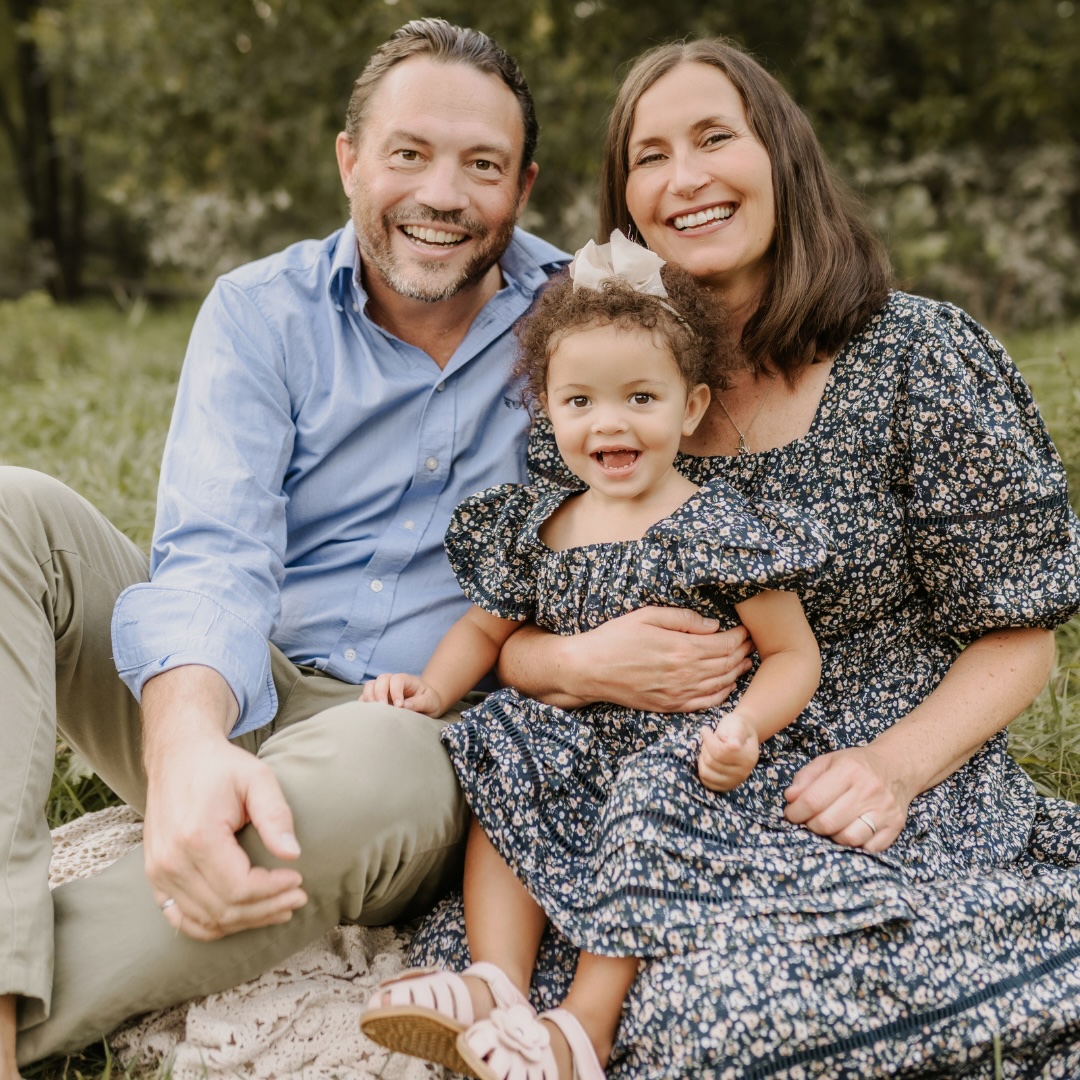
We are Koen and Barbara from Calgary, Alberta, and we have been married for 17 years. In September 2023, I became a mom to our miracle baby girl.
Christina and John
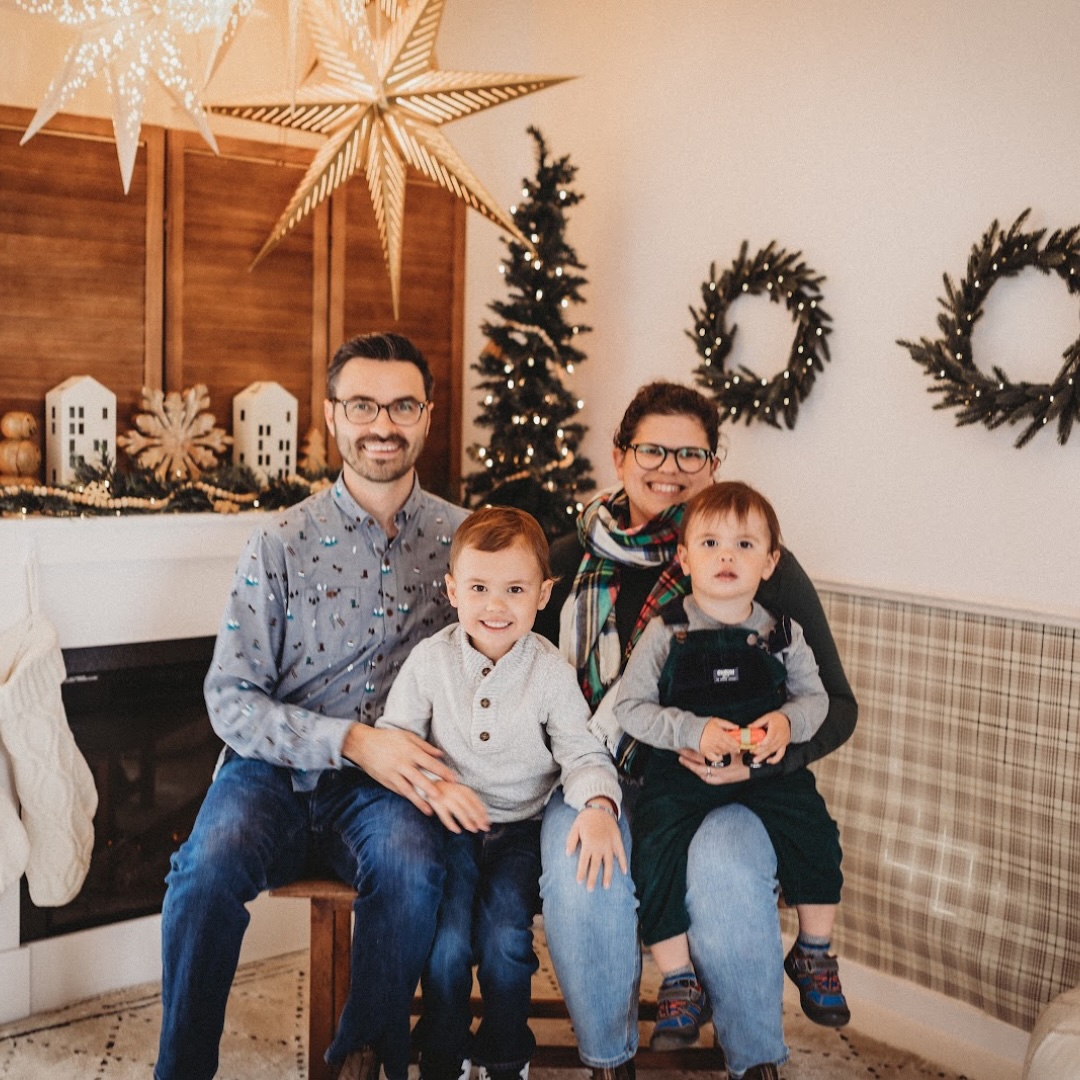
We started trying to get pregnant during the summer of 2016 and we were able to conceive the first month.
Kira & Desirée
As my fiancée and I begin to plan our future and build our family together, we have realized there are many daunting challenges that lie ahead.